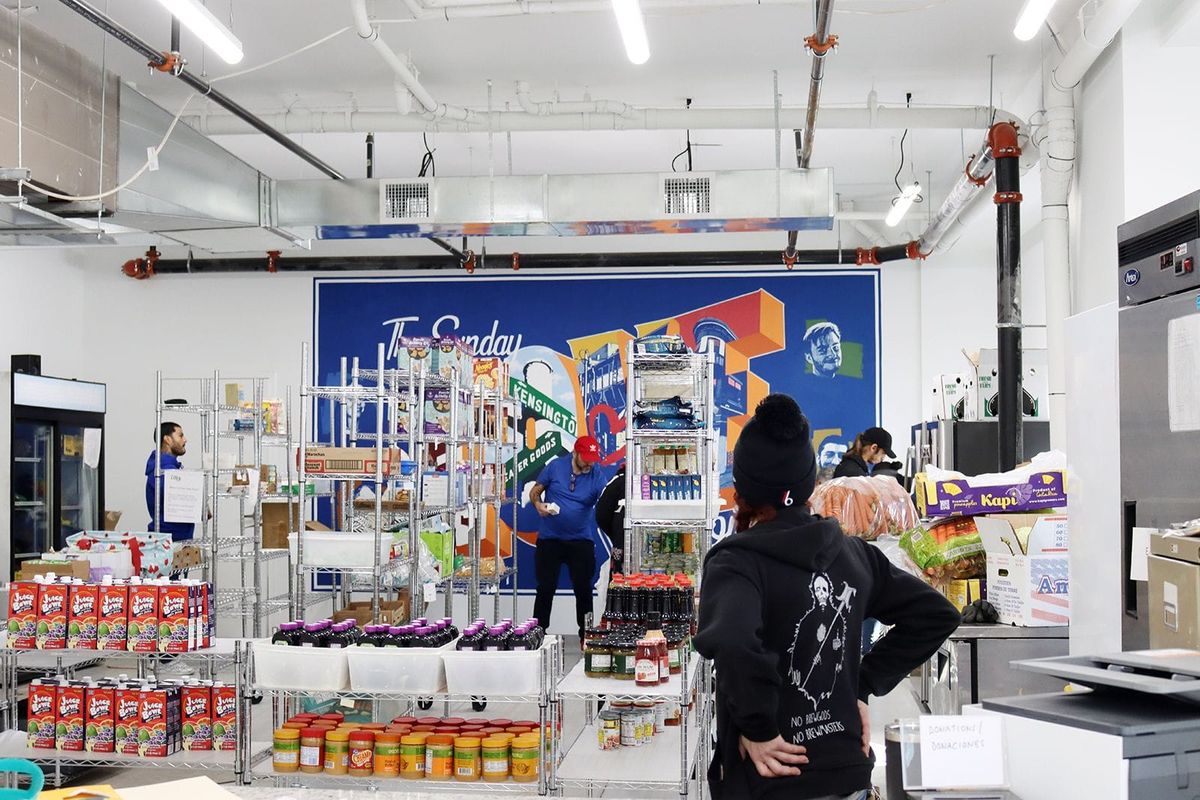
Before 9 a.m. on any given weekday, a line begins to snake around the corner of Kensington and Allegheny avenues. From the sidewalk, the small storefront at the head of the line looks like a grocery store. That’s the point.
When the doors open, customers at Greater Goods walk the aisles past shelves of milk, eggs, produce and pantry staples, counting points instead of dollars. Every customer gets 20 points to spend, twice a month, and chooses what they want. Milk costs three points.
“It kind of restores the dignity in visiting a food pantry,” said Melanie Beddis, Greater Goods’ director of operations.
Most food pantries hand customers a pre-packed bag. They ask for an address, a ZIP code, an income statement. Greater Goods does none of that. The only requirement to register is a photo ID.
“We don’t care if your ID is from a different country, a different state, if it’s just a city ID,” Beddis said. “As long as you have that ID, we can get you in the door.”
The free grocery store is the storefront face of the Sunday Love Project, the nonprofit Margaux Murphy founded in 2014. It began as Murphy feeding people in Love Park on Sundays, expanded to Rittenhouse and opened its Kensington storefront in August 2022. The Sunday Love Project name stuck for the parent nonprofit. Greater Goods is the storefront.
The store sits in a neighborhood where food insecurity is the rule, not the exception. In Kensington’s 19134 ZIP code, a Jefferson University study found nearly 40% of residents were food insecure, well above the rate for Philadelphia or the state.
Greater Goods’ food comes from a mix of sources. The store partners with Philabundance and its Retail Rescue program. A driver makes daily pickups from grocery stores, collecting food they can’t sell because boxes are damaged or expiration dates are close. ACME donates gift cards. Eggs and milk come wholesale from Shamrock. Beddis or Murphy is at a grocery store three or four times a week buying what the partners can’t cover.
“In the beginning, Margaux was slowly funding it herself,” Beddis said. “But we’ve been really lucky now that we’re at a point where we have enough donations and grants and different sources of income coming in to where we don’t have to fund it ourselves.”
Rosa Canal, who lives in Bucks County, had never been to Kensington before she started volunteering at Greater Goods in 2021.
“The first day I went, I was petrified,” she said. “I didn’t know what to expect.”
She started coming once a week, then twice, then three times. She speaks Spanish, which matters in a neighborhood with a large Hispanic community. She now volunteers Tuesdays, Wednesdays and Thursdays.
“It’s like a little family in there, and we all help each other out,” she said.
Some of those relationships go beyond the groceries. Canal remembers a man who came in one day and told her he had been sober for 30 days.
“I gave him a really big hug, and I said, ‘I’m so proud of you,’ even though I don’t know him,” she said. “This is hard. This is really hard. And look what you’re doing.”
A month later, he came back. He asked if she remembered him.
“I was like, ‘Oh my god, of course,’” Canal said. “I’m so happy to see you.”
Greater Goods’ reach now extends beyond Kensington. When federal SNAP benefits were disrupted during the 43-day government shutdown last fall, demand at the store surged. Beddis can see it in the ZIP codes.
“These are people coming from all over,” she said. “It’s not just somebody who doesn’t have a job, or somebody who got cut off from SNAP. People who aren’t usually affected by food insecurity are becoming affected.”
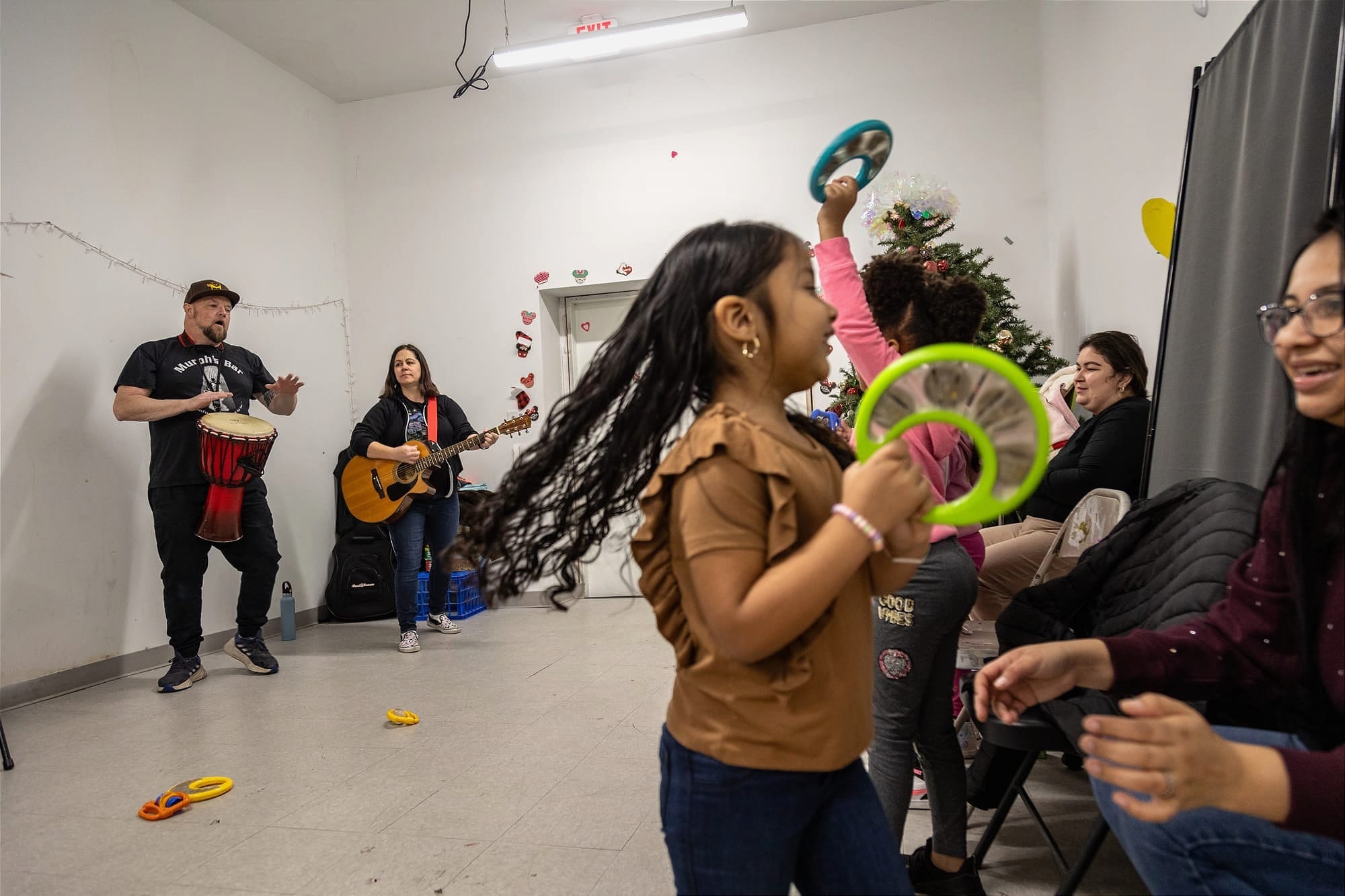
Greater Goods does more than groceries. Mondays from 9 to 11:45 a.m. are reserved for neighbors 65 and older, with breakfast served so they don’t have to wait in line. Wednesdays include emergency diaper distributions. Every Saturday, Greater Goods runs free programs for kids: a chef teaches cooking, an art teacher runs crafts, a music instructor comes through, or there’s a movie.
“We just really want to keep that sense of community in the community,” Beddis said. “Whether or not people are trying to gentrify Kensington or isolate Kensington, we want to just be a staple in the community and keep that sense of community there for everyone.”
For Beddis, the mission is personal.
“I am in recovery from substance use,” she said. “I used to be homeless on the streets of Kensington, addicted to drugs.”
When she got sober, she started doing outreach in the neighborhood, working for a nonprofit. One day she walked into Greater Goods and met Murphy, who, Beddis said, “has always been good with working with people, giving people a second chance, people with criminal backgrounds.” Murphy offered her a part-time job. Within a year and a half, it became full-time.
“It’s really been impactful for me to give back to the community that I kind of wreaked havoc in for so many years,” Beddis said.
She thinks the people who come to help Kensington often miss who actually lives there.
“A lot of times when people get the idea that they want to go help Kensington, they’re looking strictly at the people who are addicted to substances, or the people who are unhoused,” she said. “I was one of those people. And then when I got the opportunity to work at Greater Goods, I started to look at the community that’s always been there, the community that’s always been neglected. A lot of times they get looked over because they’re not what’s on the news, what’s on the YouTube videos.”
For Canal, the work is simpler than that.
“People don’t become addicts overnight. People don’t get sober overnight. There’s sadness. Sometimes there’s loss,” she said. “But in the end, we’re providing a service, and we’re giving the customers the autonomy to be able to choose their food, not to be just thrown a bag.”