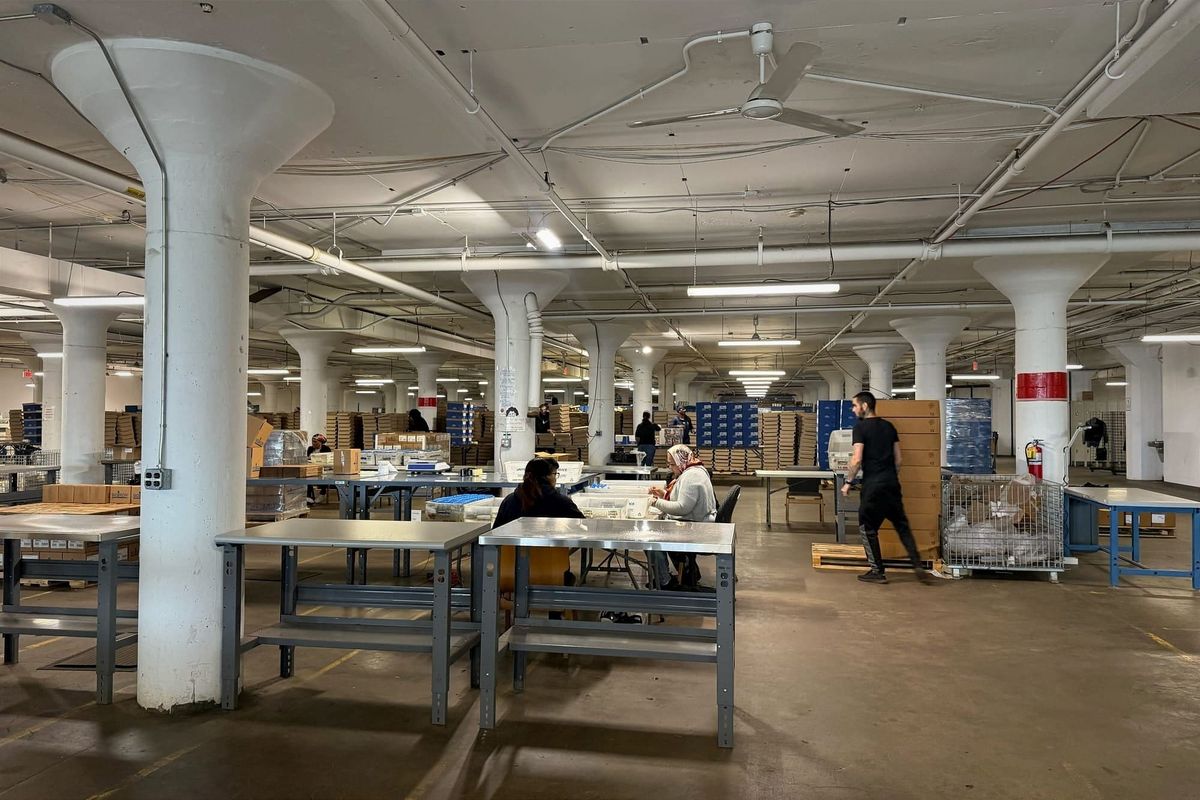
By 6 a.m. on the Baker Industries production floor in Kensington, staff are already laying out tools, organizing materials, and mapping the day's goals.
By 8 a.m., participants have clocked in, huddled, and gone to work, shrink-wrapping, labeling, kitting, and assembling materials for clients like Tastykake and the Philadelphia Museum of Art.
For Aaron Smith, the head of shipping and receiving, this floor is more than a workplace.
“This place is my sanctuary,” said Smith. “It really helped me become the person I want to be. I'm not there yet, but it's helping me grow into someone I can be proud of.”
Smith came to Baker after serving 22 years in prison. He had been struggling to find work when a friend he passed on the street told him the program was hiring.
“I was nervous because of my background, but Baker Industries gave me an amazing opportunity,” he said. “They came and they hired me.”
Baker Industries is a workforce development program built around light manufacturing. But for many participants, it's also the first step toward rebuilding a life after incarceration, homelessness, and substance use disorder.
“I would describe Baker as transitional employment for hard-to-employ individuals,” said Lisette Morales, a senior production manager who has worked there for about nine years. “We're a stepping stone from incarceration or instability to real work.”
Charlie and Weezie Baker founded the program in their garage in 1980 to create work for their son, Justin, who has epilepsy. The Kensington warehouse, on I Street near Erie Avenue, opened in 1988. That mission of dignity, opportunity, and purpose has since outgrown its origin story. Today Baker serves about 300 participants a year and has reached more than 12,500 people over its history, according to Morales.
Participants often arrive after incarceration or homelessness, during recovery from substance use disorder, or while navigating a disability. Many come without stable housing, job experience, or support systems.
Baker doesn't just provide employment. It connects participants with housing resources, furniture banks, and support services, and works closely with halfway houses, parole officers, and local organizations to reach those who need it most.
The program mirrors real-world employment: coworkers, production goals, and work schedules. Participants can stay up to a year while completing a 12-week series of workshops on financial literacy, job readiness, and personal development. Guest speakers cover banking, credit repair, and how to clear parts of their criminal records.
In 2025, Baker placed 73 participants into jobs at an average post-graduation wage of $18.50 per hour, Morales said.
“We provide the connection to resources,” said Morales. “But it's up to them to want it.”
Janel Pierce was referred to Baker by a parole officer. Within months, she moved from a general worker to a team lead, overseeing production lines and guiding others.
“When you've done things that kind of messed up your life, getting a chance to straighten it out and do something different, it feels good,” Pierce said.
Beyond the technical skills, she said, she gained confidence and learned how to lead.
“I learned how to be a leader and how to work with other people and how to guide them to the same goal,” she said.
For Ana Nancy, who has been at Baker for almost a year, the program offers something else: community.
“Everybody here is going through something. Everybody has a struggle they're trying to get over,” she said. “But working with people who don't judge you and uplift you every day, that's what makes me happy.”
For many participants, just being there each day is its own kind of progress.
“Just showing up and doing my job every day, that's rewarding,” Nancy said. “Being a part of Baker Industries and given the chance to start over is the most rewarding.”
Its biggest obstacle isn't the work. It's convincing employers to hire its graduates.
“When they go out there and interview and get turned away because of their background, they come back disappointed,” Morales said. “There should be more employers willing to give them opportunities.”
For Morales, the work is also about Kensington itself.
“What are we doing with them?” she said. “Let's show them this is your community. You belong here.”