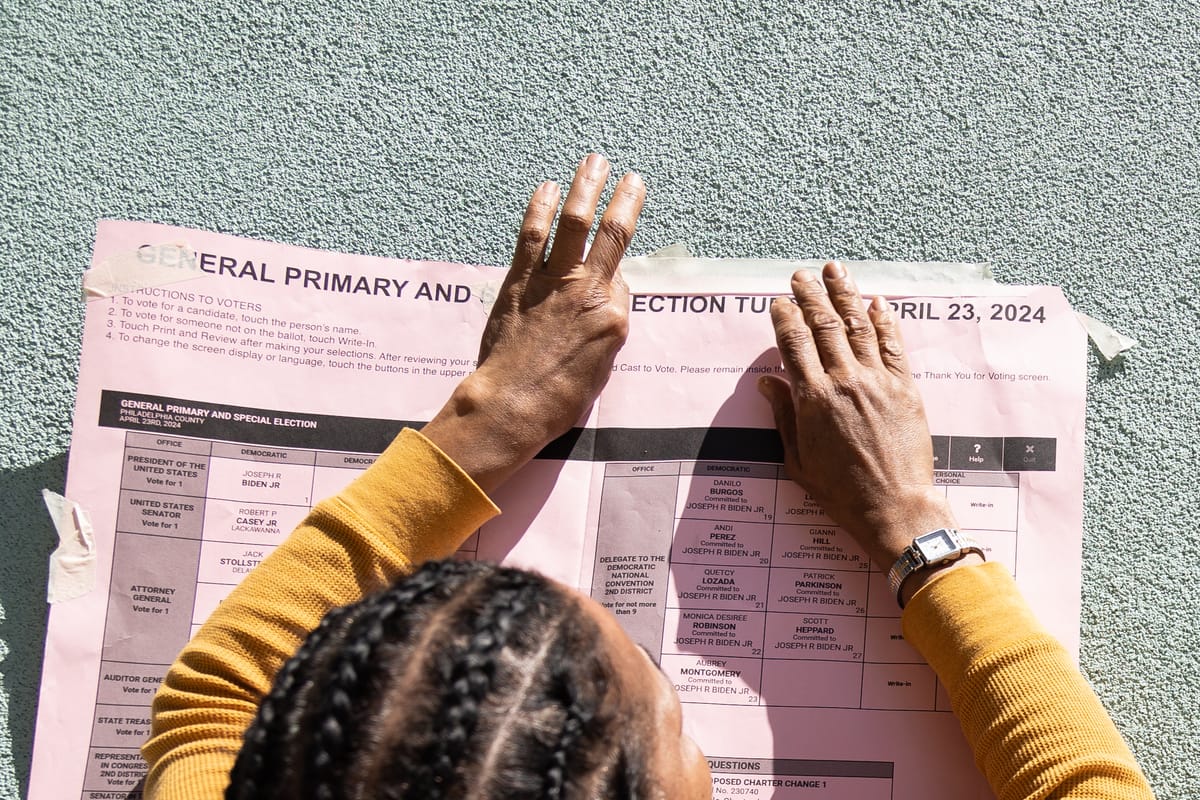
Philadelphia is recruiting poll workers for the 2026 elections, including parts of Kensington. City officials say some divisions there have struggled to fill those jobs in recent elections.
About 8,500 poll workers staff roughly 1,700 polling places across the city on Election Day. In Kensington, that includes divisions in the 18th and 31st wards. Officials are seeking workers ahead of the May 19 primary and Nov. 3 general election.
Meghan Blickman, Philadelphia’s deputy executive director of polling places and election boards, said people who want to serve should fill out a short survey at vote.phila.gov and look out for a follow-up call.
“We follow up with new poll workers about six weeks before every election,” Blickman said.
She encouraged new applicants not to ignore calls from the city.
Blickman said the city tries to assign poll workers to their home divisions, or at least to their home wards. But some parts of the city produce more volunteers than others, and some workers are assigned outside their neighborhood to fill gaps.
“Assigning poll workers to locations is an art and a science where we prioritize communities and neighborhoods,” Blickman said.
Because there are often fewer volunteers from the region, Kensington residents who work polls can expect to be assigned to one of their local wards.
What poll workers do
Each polling place is staffed by six workers: a judge of elections, who oversees operations; a majority inspector; a minority inspector; a clerk; a machine operator; and, in some divisions, a bilingual interpreter.
Poll workers arrive at their polling places between 6 and 6:30 a.m. before polls open at 7 a.m. The workday lasts until after the polls close at 8 p.m. and voter tabulation materials are collected.
Jeffrey Barg, who supports communications for the city commissioner’s office, has also worked as a poll worker. He said the job offers a direct way to help voters and support the election process.
“I view it as my job to make the voting process as simple, easy, and frankly as enjoyable as possible,” Barg said. “Because if somebody comes to vote and they feel good doing so, they're more likely to come back.”
The commitment is usually one training day and one Election Day shift each cycle. Poll workers are paid $200 for Election Day, according to the city.
“There is no better way to restore your faith in the process and then what's going on than to go and actually be a part of that process,” Barg said. “There are responsible, dedicated election workers who are making this election happen on the ground.”