
Jeán Ruiz remembers their high school years in Kensington as a period of stress and survival — both at home and at school.
They lived in affordable housing with their single mom. The time they might have used for homework or tutoring was often spent doing odd jobs to help pay the rent.
Those worries made it tough to prioritize school, they said.
They recalled trying to focus on 12th grade calculus: “I was so lost and confused.”
Ruiz wasn’t alone. Family and financial stress, on top of daily exposure to poverty and drug use, make it harder for many Kensington students to make it to graduation, according to experts and educators.
Kensington’s median income is among the lowest of all Philadelphia neighborhoods, and it has twice the number of adults without diplomas as the city on average, according to a 2025 report from Pew Research.
“It’s not like we don’t want to get diplomas,” said Ruiz, who is now 24. “It’s just that it’s inaccessible for us.”
Experts say a high school diploma is a crucial foundation for stable employment later in life. Research shows people with diplomas earn bigger salaries, are qualified for a wider variety of jobs, and even have stronger health outcomes. That’s why high schools are building up support for students like Ruiz through strategies like embedding college prep organizations, mentorship, and career counseling. And graduation rates are trending upward for some schools in the neighborhood, creating a new wave of Kensington kids who make it past the finish line.
“Graduating from high school is a life or death issue," School District of Philadelphia Superintendent Tony Watlington said in his State of the Schools address this month. “When children graduate college and career ready, it has a major impact on the economy of any city.”
Amiyah Acosta-Peterson, a 10th grader at Kensington Creative and Performing Arts High School, known as KCAPA, said her family and extra school support have helped keep her on the path toward college.
“My family, they motivate me to get good grades,” she said. “They tell me the benefits of it. The teachers also do it. So that's what makes me want to keep going.”
She holds tight to her dream of becoming a doctor, despite the hopelessness she says many students feel when they walk past open-air drug use on the way to school each day. That kind of environment leads them not to take school as seriously as they could, she said.
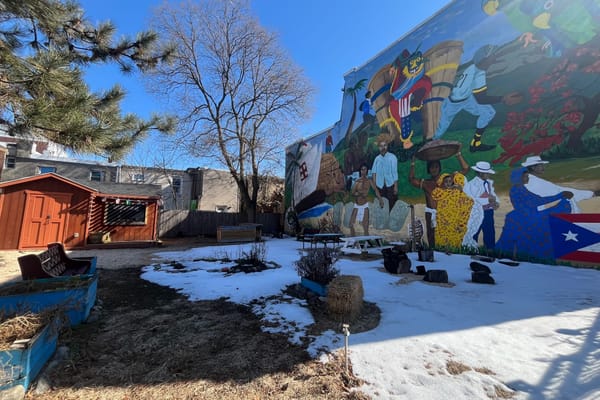
For Ruiz, the key to graduating high school was supportive teachers as well as mentors at Taller Puertoriqueño, a Puerto Rican cultural center in Kensington. They now lead an after-school STEAM program there for neighborhood kids.
“Everyone is trying their best to become their dream,” Ruiz said. “And sustain not only themselves but their village as well.”

Showing Kensington kids their potential
Graduation rates at several high schools in Kensington are on the rise.
According to district data, the share of students who graduated from Kensington High School, or KHS, within four years rose from 63% in 2017 to 72% in 2023. Kensington Health Sciences Academy, or KHSA, had a four-year graduation rate of 83% in 2023, up from 71% in 2017, although KCAPA’s graduation rate has declined from 76% in 2017 to 72% in 2023.
Rising graduation rates haven’t taken place in a vacuum. There have also been major statewide changes to graduation criteria recently that aim to create more options for all Pennsylvania students to earn diplomas.
But getting diplomas into student hands largely comes down to staff supporting students on the ground, said Kensington High School Principal Jose Lebron. Some of the work is handled by non-profit organizations like 12+, a program that stations advisers inside schools to help keep students on track to graduation and postsecondary opportunities. The non-profit launched at KHSA in 2012.
The group has an open door policy: KHS seniors averaged 32 check-ins with their 12+ advisers in 2024 — far beyond the capacity of the school’s regular guidance counselors, each of whom is assigned over 200 students.
KHS guidance counselor Liz Winter helps students figure out what they need to graduate. But when they deviate from the plan and start missing too much school, Winter may connect them to 12+. Many of those students aren’t considering higher education and say they want a job, but don’t know what kind.
Once students understand what a high school degree unlocks, “going to school all of a sudden becomes way more incentivized,” said Frank Wang, the chief of staff for 12+. Across all the schools that 12+ works in, he added, “We're seeing convincingly that our students want to be in school more, and attendance is a strong correlation to graduation rates.”
Advisers with 12+ show students what is available to them beyond graduation, whether it's college, a trade apprenticeship, a workforce development certificate, and help them with incremental steps towards those options, like completing the FAFSA, working on resumes, or helping them get a merit scholarship.
“12+ is the missing link,” Winter said.
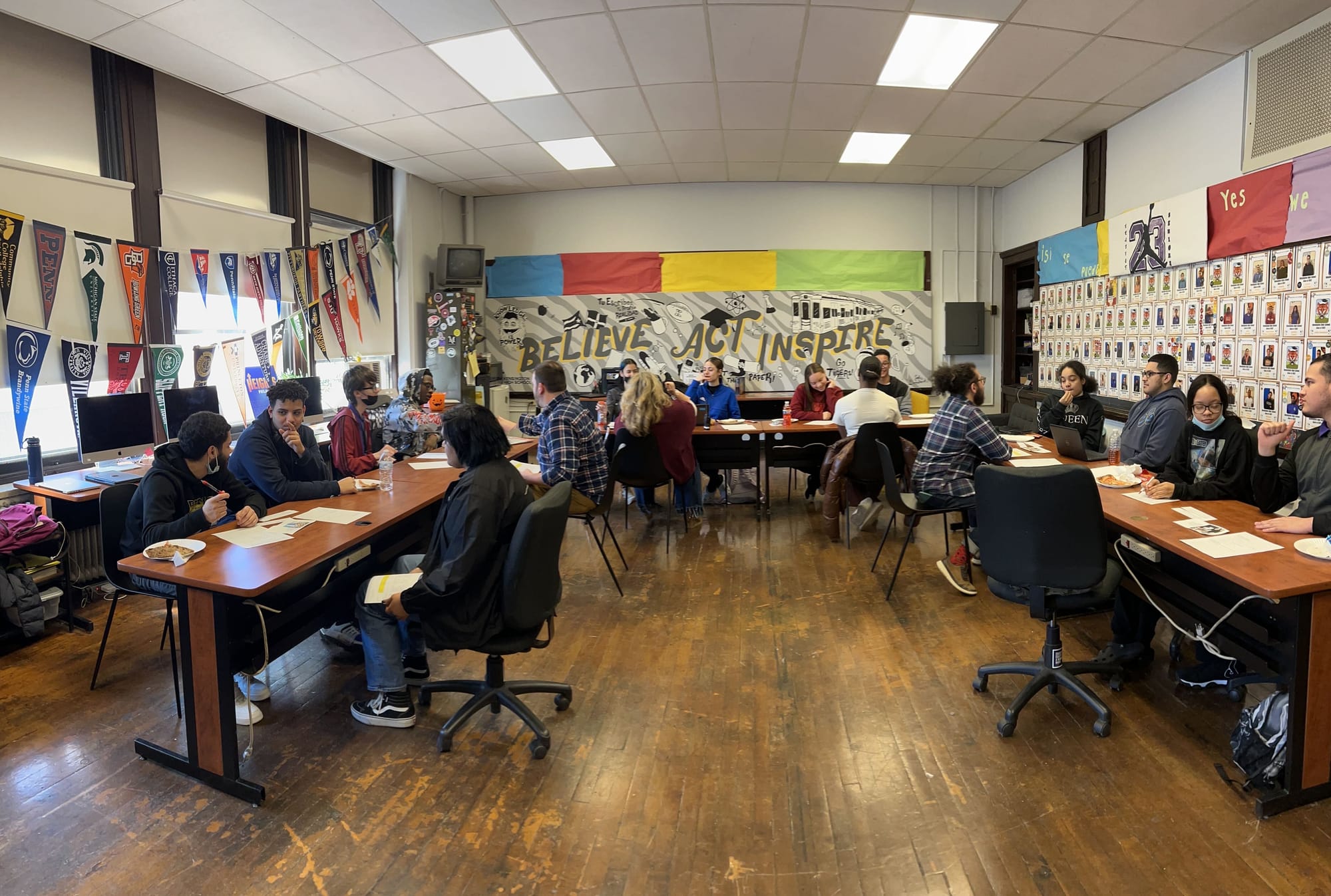
Another program, Heights Philadelphia, pairs students with career counselors or college advisers who can support them with interview preparation, class selection and financial aid. Chief program officer Annie Soler said 100% of students in the Heights program graduate high school and 90% enroll in college.
“We’re seeking out students who might not be on the trajectory for college or for entering into the workforce,” she said. “We’re recruiting 10th graders and supporting them through 12th.”
That kind of one-on-one help is especially important for students who come from communities where knowledge about getting a college education is limited, said Laura Perna with the University of Pennsylvania’s Graduate School of Education.
“Students in Kensington may have strong family support and be able to persist through adversity, and at the same time they may not have networks and sources for how to navigate through these systems — college applications, financial support, which middle and high school courses to take,” she said.
Making these efforts successful requires forming trust and relationships, said Joyce Li, a supervisor with 12+. Advisers ask students about their lives and find out what immediate concerns are hurting their attendance. Sometimes it’s relationship drama, or it’s fear of a teacher after a low grade. It’s a holistic approach to mentorship, troubleshooting whatever obstacles are in students’ way, strategizing steps forward.
Often they’ll start talking about the future after the stressful situation has passed.
“They need to know there’s life after high school,” Li said. “That there’s hope, that there are good things in store for them.”
Trusted adults can be key to motivating students
While 12+ and other groups focus more on career-readiness, school staff might deal with more personal and academic issues.
Lebron said KHS throws out a safety net for students by ensuring teachers accommodate them, providing check-ins at report-card periods, and offering informational town halls about graduation requirements. They also offer credit recovery and summer school, if all else fails.
Lebron referenced lack of support at home as a contributing factor for a student not making it across the finish line. When they don’t have parents’ encouragement, the onus falls on the school.
That’s all the more reason to have pipelines to alternative workforce programs and mentorship, said Kensington Health Sciences Academy Principal Dr. Nemet Eren.
“Sometimes it feels like we are squeezing blood from a stone, because there's just so much that needs to happen, and we need support from outside programs,” Eren said.
The students at risk of not graduating are often identified early, most likely because of low attendance. Winter said combatting absenteeism starts with parents.
“We need parent involvement,” she said. “We have a lot of kids right now facing mental health [challenges] … because their parents are checked out,” she said.
Much of her job is dedicated to meeting with parents, to better understand what’s going on behind the scenes and help coach them on how to motivate their kids.
For Nasir Davis, a Kensington High School junior, the support of his family, teachers, and basketball team — the Kensington Tigers, a team made up of KHS, KCAPA, and KHSA students — keeps him on track.
“I could go to different people if I got problems with the work,” Davis said.
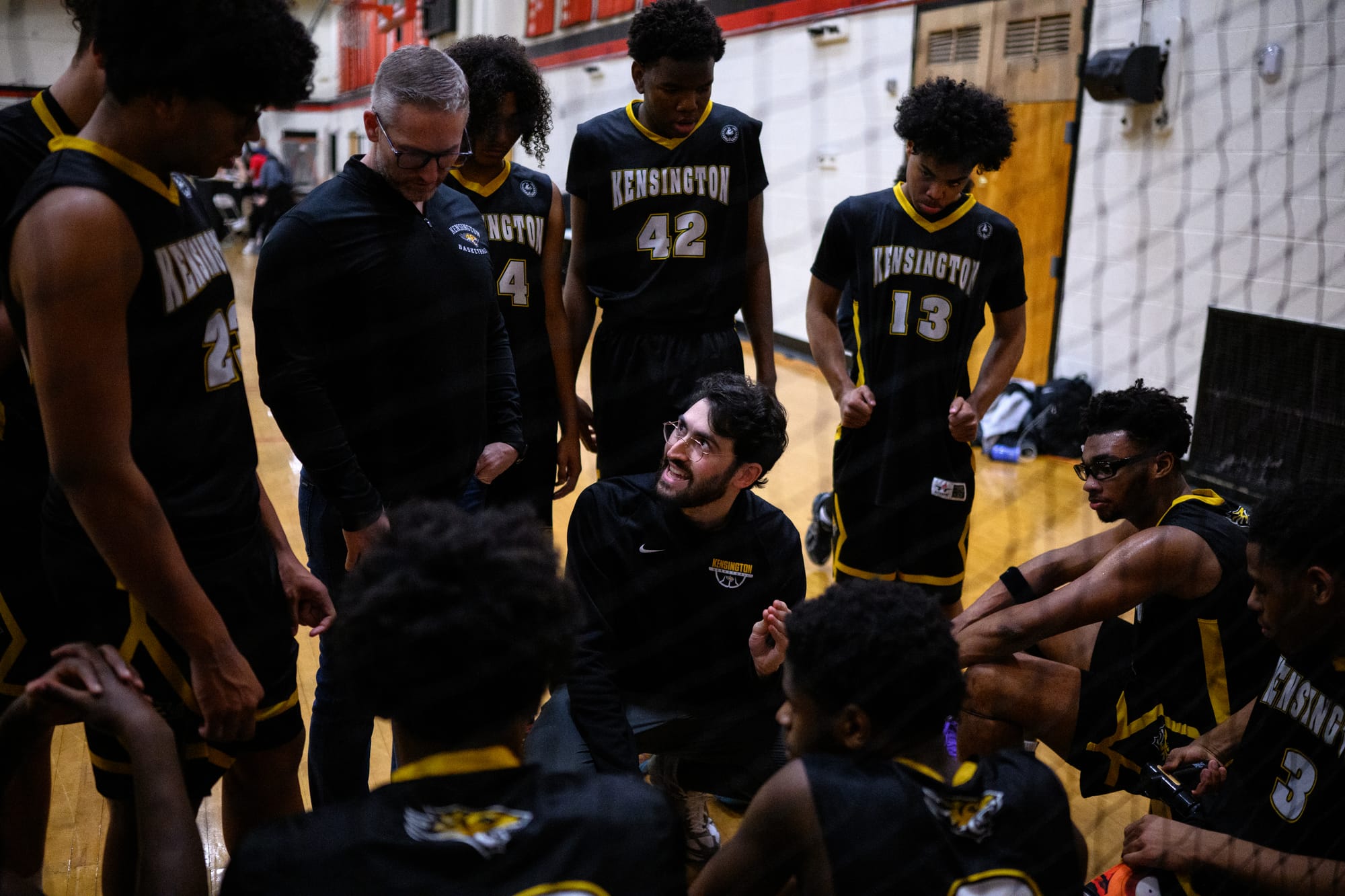
To be on the Tigers, who had a successful season and landed third in their division, the players have to sign a contract agreeing to maintain average grades of C or above, a standard set by coach Ethan Feuer.
If they can’t keep their grades up, they’re benched. It means “they don't have time for basketball,” said Feuer, who teaches ninth grade English at KHSA. Players on the team look up to Feuer, have built tight relationships with the coach, and appreciate his high standards.
After a victory over Philadelphia Academy Charter in early January, Feuer said everyone on the team will graduate: “I'll have kids during practice sitting on the sideline doing their homework and working together before they can step foot onto the court.”
Whether it’s a coach, a parent, a teacher or an adviser, it all comes down to having at least one caring adult, said Li, the supervisor with 12+.
“There are all these opportunities and resources,” she said. “But if you don't feel like the person who's telling you this stuff cares about you and genuinely follows up with you consistently, then they’re not going to do it.”